


Episode Summary
What if your customers are telling you exactly how to improve your business… and you’ve never heard a word of it?
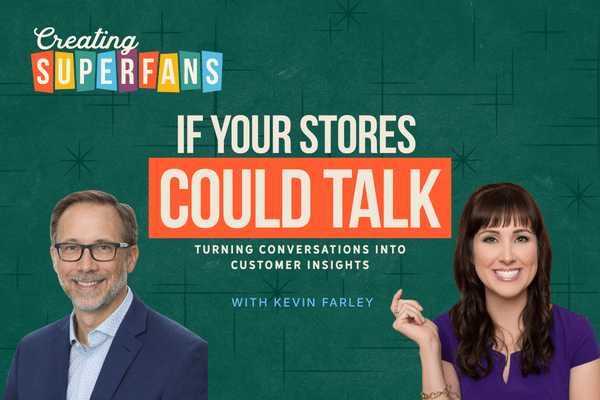
In this episode of Creating Superfans, Brittany sits down with Kevin Farley, Chief Customer Officer at InStore AI, a company that helps convenience store retailers understand what customers and employees are really saying during in-store conversations. By using AI to analyze millions of real-world interactions at the point of sale, InStore AI uncovers insights that help retailers improve customer experience, coach employees, and make smarter business decisions.
Together, they explore why the most valuable customer feedback often isn’t found in surveys, how AI can reveal hidden opportunities inside everyday conversations, and why the future of customer experience isn’t about removing human interaction—it’s about making it more meaningful.
You’ll learn:
- Why neutral customer interactions are more dangerous than many leaders realize
- How AI is uncovering customer insights that traditional surveys never could
- Why employee friction is often the hidden cause of customer friction
- How leading retailers are using conversation data to coach—not police—their frontline teams
- Why the best customer experience strategies still depend on human connection
- How retailers can identify unmet customer needs before they show up in sales reports
- Why listening at the point of purchase can transform merchandising, operations, and employee engagement
- Kevin’s prediction for how AI will reshape retail over the next five years
Learn more about InStore AI here.
Listen to the Episode
Listen on Apple Podcasts
Listen on Spotify
Watch on YouTube
Transcription
How much of your customer feedback are you missing?
Many companies rely on surveys, reviews, and customer complaints to understand what their customers think. But what if some of the most valuable insights aren’t showing up in any of those places? What if they’re happening in the everyday conversations customers and employees are having right there at the point of purchase?
My guest today is Kevin Farley, chief customer officer at InStore AI. His company helps retailers understand what customers and employees are really saying during their in-store interactions by using AI to analyze millions and millions of real-world conversations.
In this conversation, we’re talking about why neutral customer experiences may be even more dangerous than bad ones, how employee friction often becomes customer friction, and why the future of customer experience isn’t about replacing human interaction with AI, it’s about using AI to make those interactions even more meaningful.
You’ll also hear how leading retailers are uncovering hidden customer needs, coaching frontline teams more effectively and efficiently, and discovering insights that traditional surveys simply can’t provide. I’m Brittany Hodak. My guest today is Kevin Farley. This is the Creating Superfans Podcast. Let’s go
Brittany Hodak: Kevin, thanks so much for coming on the show
Kevin Farley: Thanks for having me. It’s great to be here
Brittany Hodak: So I know you could do a much better job than I just did in the intro. Tell us a little bit in simple terms what InStore AI is and what you do
Kevin Farley: Sure. So we help retailers of all kinds measure and analyze in-person interactions effectively. So we, um, analyze millions of transactions, uh, between the cashier and the consumer. We use our l- large language models, uh, analyze it for insights, specifically actionable insights. And instead of guessing why, why sales might be up or why con- a c- customer leaves in frustration, et cetera, um, we can tell you the con- the insights from those conversations, and really focus on the truth of the conversation and, um, allow you as a retailer to educate your, your team, um, promote, [00:01:00] differently and really focus in on what is the outcome of those interactions
Brittany Hodak: So what I was so fascinated by when I met you and your team and learned about your product is the fact that you’re going from, from anecdote to data, and you’re also able to zoom in and out simultaneously. So obviously you’ve got those micro interactions, that, that one conversation, that one moment, but then you can zoom all the way out and say, “This is what it looks like over 10,000, 50,000, 100,000.”
I’m so curious, what have you found to be common trends of everybody thinks it’s X, but it’s Y? Or people anecdotally believe this, but when we look at the data, we actually find out… Like, where are those gaps in experiences that we just are so biased to that once we take a step back and look at, we’re surprised what the data actually tells us?
Kevin Farley: Yeah, it’s fascinating. So part of what we capture is the sentiment of the conversation, right? And so one of the things that we [00:02:00] shared at our conference when we met each other is, the high level of just neutral interactions, right?
Especially in the convenience store s- segment, uh, which we spend a lot of time in. Um, it’s amazing the amount of t- just transactions where it wouldn’t take much to move from, if you use net promoter score, from a, a neutral score to a positive score. Most– the vast majority of the conversations are just neutral.
But I think, you know, I’ve been in the C-store space for the last 20 years, and I’ve done a lot of store rides, I’ve done a lot of store visits, done a lot of ex- executive rides. Everyone walks into the store thinking that that’s how the store normally operates, um, and that’s simply not true.
And, you know, I think when you look at it from a l- loyalty, um, pr- point of view, um, that interaction, they– everyone thinks that the, the cashier, who’s typically a lower end, uh, from a pay scale perspective, is doing their [00:03:00] best. And they are doing their best, but they’re not doing it probably what, from what the headquarters thinks they’re doing it.
And so a lot of those conversations are simply transactions, and they could be moments of engagement, they could be moments of happiness, but the vast majority of them are not that way
Brittany Hodak: And you know, one of the things that I’ve always found so fascinating, especially in convenience retail where turnover is high, demands are high, there’s oftentimes only one or two employees in the store managing a lot that’s happening simultaneously. And people say to me, “Well, it is what it is.” There’s sort of this like throw their hands up in the air of like, “We’re doing the best we can,” or they look at it and, and they optimize for reducing friction or reducing negative rather than saying, “How can we reimagine this to be a delightful experience, to be something that leaves that customer a little bit better than when they walked in and, and [00:04:00] elevate it from a, from a transaction standpoint?”
And, uh, you know, I find that so interesting because in a lot of industries it’s not like, oh, we’re just resigned to the fact that like, this is gonna be, this is gonna be neutral. Um, and so I’m really curious as somebody who is, who’s a veteran in this, in this industry, do you find that attitude to be pervasive?
Is that something that, that you find people say like, “Oh, it’s sort of like we’re gonna do the best we can, and if, if it doesn’t work out, there’s gonna be a new cashier in three months anyway,” versus saying, “Let’s truly design an experience that we know we can optimize, that we know is repeatable, and, and give people the, the guardrails of what excellent looks like”?
Kevin Farley: .So the answer to your question is yes. I mean, it is pervasive across the industry. Not for everyone, and I’m not gonna mention names here, but just in general, the C-store industry, because of that high turnover, um, tends to have a doing the best we can. And so the s- the level of management just above the store district zone, et cetera, [00:05:00] um, th- they’re doing their best to keep the lights on, keep the, the team engaged.
Um, and what we’ve been able to f- help them with is some of those interactions, those conversations that they’re having with the consumer become these teaching moments, these coaching moments. And so we actually have a, a parking lot report. So as you drive up to a store, if you’re the zone manager, et cetera, you can go back the last 10 days, seven days, et cetera, and look at both positive and negative, let’s call it, but areas for improvement from that particular store.
And get with the store manager, get with the store team, and actually use it for a celebration to say, “Hey, this particular shift and this particular day did this fantastic upsell of this promotion that we were running,” or the loyalty asks, et cetera, and use it as a carrot, not a stick, in order to, um, improve overall team morale.
We actually have one retailer that has been with us for the last year or so and has seen their turnover go from [00:06:00] approximately 120% down to n- 85 or so. So it’s a big improvement when you use that, those insights, for sure
Brittany Hodak: Absolutely. So you’ve analyzed so many millions of customer conversations at this point. What’s an insight that consistently surprises leaders when they actually look at the data in aggregate?
Kevin Farley: I think the biggest one– There’s lots, obviously, when you do a mil- millions of transactions, but I think the biggest thing that we can provide, and getting back to your friction point earlier, um, there’s two points. One, everyone talks about frictionless, and, and I, I guess I’m here to say friction is important.
You need friction. It’s not a negative to have friction. The customer journey, whether it’s from the loyalty app, especially in the C-store space, you, you gotta have people come into the store. So they have to leave their car, typically at a fueling station, go inside, and, and purchase a [00:07:00] product. And so there is a journey, and the journey is inherently friction-oriented. To your point, it needs to be a positive, um, association with that friction. And so, I think one of the things that’s the most interesting is everyone has their transactional data, you know, out of stocks, inventory, all that kind of stuff. The conversation insights are able to show you as a retailer what the consumer came in for, either you don’t carry it, which isn’t gonna be in your transaction, uh, information, or the consumer’s really excited about this new product that they heard of online or whatever, and you– again, you don’t have it in your store, et cetera.
There, there’s a bunch of information around what almost sold in your store that people just don’t have access to the most
Brittany Hodak: Which is so fascinating that we’re now at a point where, you know, I think I said to you when I met you, “Wow, I, I feel like [00:08:00] I’m living in the future hearing you talking about…” Because for anybody who’s, who’s still a little bit unclear, what we’re talking about is real-time audio capture of conversations happening at the checkout that’s also then tied to the point-of-sale data.
So we could say, you know, are, are, are people buying a Dr. Pepper because the Dr. Pepper- the frozen Dr. Pepper machine is broken, right? Or, or what percentage of people are coming in saying, “You know, I can’t believe, uh, I, I can’t believe you guys still don’t have the, the, the, the ice machine fixed again. I’m only gonna be buying bottled drinks until you, you know, fix the ice machine.”
Whatever it is. Like, you’re, you’re catching things that before you would’ve either, A, completely missed, or B, have been dependent on the human employee relaying, and then you’ve got anecdotal, not big picture data, which means sometimes you can optimize for solving a problem that’s a problem to one person rather than the thing that goes unmissed [00:09:00] to, you know, 60, 80, 120 people over the period of, you know, a day, a week, whatever.
Uh, which is just really, really, really cool, and it’s a great example of the application of high tech and high touch coming together to create this… You know, like I said, it feels like we’re living in the future. Like, we have the ability to, to, to do all of this at mass and scale. Um, because you’re right.
You’re able to, to, to say, “What are the things that are being asked for that we don’t carry right now?” Or, “What are the common complaints around things that maybe you don’t see on a store visit?” Because when you’re there, you know the food is gonna be hot and fresh, or you know the machines are gonna be clean for the, for the drinks or, you know, whatever, whatever the case may be of, of, uh, any of those variables.
Kevin Farley: Yeah, one, one of the great examples, and again, I’ll, I’ll keep the retailers’ names out of it, but, um, they, they’re using our platform, and a lot of the conversations that we track are for age-restricted, uh, products, tobacco, alcohol, et cetera, because those have to have conversations behind them. But regardless of that, we, we track and, and, and, um, [00:10:00] um, analyze all the different conversations.
And so the one retailer was, was talking to me and said, “Hey, we’re, we’re having… In this particular segment of, of our, uh, company, we’re having, um, a decline in coffee sales.” And so they went into the, the system. We have a search ChatGPT-like, uh, search bar, and just asked the system, “What are customers saying about the coffee?”
And it turned out customers were complaining about the cold temperature of the coffee. That’s never gonna be picked up anywhere, right? the custom- the cashier hears it, but are they reporting that to anyone? Eh, probably not. They’re doing their job. They sold a cup of coffee or they didn’t. It, it doesn’t– say it doesn’t matter, but they kind of just go, “Okay.
Well, the coffee’s cold. I did my best. I c- I just made it, so it should be warm. I don’t know.” And, and so they actually used the amount of people saying the coffee was cold to go and replace those, at those stores, the, the equipment, and then saw the coffee sales return back to baseline. And so again, insights you’re just not gonna [00:11:00] get from a transaction
Brittany Hodak: I, I love that. You’re right, because there are so many insights that AI is going to be able to uncover that a survey just never could, either because of not knowing the right questions to ask or being limited in the number of things that you can reasonably ask in any standard non-AI survey design
Kevin Farley: Right. Yeah
Brittany Hodak: So if every retailer suddenly had access to all the same tools, what would still separate the winners from everyone else?
What do you see that your top stores are doing or novel implications of this knowledge, uh, that maybe not everybody is doing yet?
Kevin Farley: I think if everyone had access to all the same tools… And, and, and look, for the most part, they’ve had it until in-store AI showed up. it– So if everyone implemented AI across the board, et cetera, it, it still comes down to culture at the end of the day, right? And so the winners [00:12:00] are gonna be the ones that are looking for the insights, not the outcomes, right?
They’re gonna be looking for rapid coaching moments. They’re gonna look for empowerment of their team because that elevates the cashiers, the, the team members’ experience, which then in- elevates the consumer’s experience. And there’s retailers that are built on that foundation of it has to be the experience, right?
It’s all about the experience. And so AI, uh, even the, the coffee, um, ex-example, gives you the ability to listen almost in real time to what the consumer is saying and take appropriate action. That could’ve– That example in the cold coffee could’ve been months before anyone knew about it. They’d sit there and look at the transaction data and say, “I don’t know.
Coffee’s just not selling,” and question mark. You just don’t know, right? And so, um, you know, AI can point you to the exact moment a customer experience [00:13:00] has succeeded or failed, um, and then you can drive around that to, um, create the change and, and the positive, uh, in-store experience for your consumer
Brittany Hodak: I love it. And you know, I know you talk a lot about the idea of, of human-centered retail and what this all means, and I wanna flip it and talk about that e- employee experience a bit. You, you alluded to it before, um, that you’ve seen turnover go down, that you’ve seen coaching moments and opportunities go up.
I wanna talk about the human side of those employees who are now being told, “Hey, guess what? We’re recording every single transaction, and this is actually a positive for you, not a negative for you. This is not a we’re surveilling you because we don’t trust you. This is because we’re looking opportunity, for opportunities to make things easier, better, et cetera, for you.”
So talk to me a little bit about, you know, A, just like kind of the human side of that, of, of how your customers are getting their teams on board, and then some of the stories [00:14:00] around how you’ve actually created really great employee wins for those cashiers and other frontline team members who are the ones participating in these transactions that are being recorded.
Kevin Farley: Yeah. I mean, it-it’s, it’s human nature, right? To say, “Hey, wait a second. I’m gonna be listened to?” Now, now what we do, of course, is all out in the public. Um, so back rooms and any private areas are secure and safe, and if you need to have a private conversation as an employee, you’re allowed to have that. so there, those spaces are still, um, private.
Um, it’s, in part, um, the system allows for also a, an extra measure of security. So most of the re- the retailers have video surveillance of some form or another, and AI video, uh, is getting smarter, and a lot of theft detec- detection or loss prevention is, can be built around that. Those two can be part of the conversation, right?
And so, um, there’s a good example of you know, from a [00:15:00] corporate perspective, let’s talk first. Um, is an interesting one because s- a c- customer can come up and say, “Hey, did I win?” And the cashier will take it and say, “Yeah, you won 50 bucks,” and hand the, the c- customer $50, but it was actually a $100 winning ticket, and they’re taking the money, right?
And so there’s a conversation there that a video can’t capture, all that kind of stuff. Um, but on the positive side from the employee perspective, uh, the, the best-in-class, uh, uh, retailers that we’re working with right now, I mean, they have competitions on a weekly sometimes or a monthly basis where they have gamified it effectively to say, “Hey, we’re gonna promote,” insert name of product here, and the stores that mention that product the most are going to win a prize.
The prize doesn’t have to be or whatever, right? But it… The whole point is to celebrate, “Hey, we’re doing our best. We’re, we’re creating the environment based on what we’re hearing, uh, and then [00:16:00] coaching around on how to upsell, um, the customer when they, when they walk in.” And so it, it, it can be really amazing to see the empowerment of the employee saying, “Hey, I made a difference to my company,” right?
And then they’re getting the coaching. The, the, the top-tier, uh, employees, they’re gonna be the top tier. The, the, the bottom tier, honestly, the bottom tier is gonna be the bottom tier. It’s the middle tier that you can really make an impact and say, “Hey, we have this coaching for you. The store down the street does it this way, this way, or this way.
We’ve seen great results. Let’s try it.” And they, they, they grab onto it, and they embrace it, and they see the results, and they get and rewards for it and, and whatnot. And that’s in part why we see the, the, the turnover, um, rate decreases because now they feel like they’re being listened to literally.
Uh, but also their, their, um, [00:17:00] their needs and their wants are being heard from corporate, which is not always the case in retail.
Brittany Hodak: Well, the thing I also find really fascinating about this from an employee experience standpoint is it’s bringing kind of irrefutable data, right? I mean, I’m, I’m sure some people would, would, would try to argue with it, but I think historically it’s been, “Oh, Jamie’s a high performer. Sorry, Becky, you’re just not a Jamie.”
And that leaves room for, for bias from, from the, the manager, the, the leadership team, um, that can create negative feelings of, you know, competition of, “Oh, it’s, it’s a personality thing. You just don’t like me as much,” or, you know, “It’s unfair. You’re saying that they… she signs up more people for, uh, the, the rewards program,” or, “He has higher ring per, per sale,” or, “But that’s tied to, you know, time of day or whatever.”
It’s like being able to say, “We’re tracking all of this data and we’re [00:18:00] also tracking sentiment,” I think creates a level of almost removing the human emotion side from a manager to say, “Based on the data, this, this team member has people who are positive X percent of the time, and this other person, uh, the interactions are only positive Y percent of the time.”
Or, you know, put it, drop in any, any measurable thing that you want. How many people are you, are you signing up for the rewards program? How many people are you, you know, celebrating something based on a, a cue that you get based on, you know, the clothing for the team that they’re following or the, you know, last day of school shirt, what- whatever it is.
Um, and so I think that’s also a really cool component of it– Yes, it’s helping the frontline team, but I think it’s also helping the leadership team to be able to say, “This gives you an unbiased look that you can share with your team and say, ‘This is the scoreboard. These, these are the rules. This is what we’re measuring.'”
And it makes things inherently more fair.
Kevin Farley: To- [00:19:00] totally agree. And your comment about the, the shifts is 100% accurate, right? Obviously, a lot of graveyard shifts have fewer transactions, et cetera. It doesn’t mean they’re the worst employees. It means their lifestyle requires them to work the graveyard shift, right? And they could be the best employee you have in the, in the store. The ring, uh, ma- the number of transactions likely is going to be lower, um, but it doesn’t mean the basket size is lower, and it certainly doesn’t mean that the consumer experience is less just because it happens to be 2:00 in the morning. It could… It could be literally your best employee, and you wouldn’t necessarily know it just based on transactional data
Brittany Hodak: Right. Well, and I would imagine in many convenience retail environments, there are probably fewer store visits happening from the leadership team and the corporate team with those overnight employees. And so I would argue what might happen is those people who are tired of working that shift who have said, “Can I get, you know, first shift, second shift?”
And are being told no, you might be losing a really great person who was willing to stick it out for a [00:20:00] little while, but you haven’t identified how good they are because you’re looking saying like, “Oh, you know, sales are flat from, from midnight to 6:00 AM,” or whatever the case may be.
Kevin Farley: Yeah
Brittany Hodak: So if you can give every single CEO one dashboard metric related to customer experience that they should really be obsessing over, what would that metric be and why?
Kevin Farley: So I think, um, overall sentiment, uh, based on customer interactions, we have a dashboard, um, already in, in store. And so effectively looking at customer friction, and I said friction’s going to exist, but out the percentage of that friction, those interactions that are positive versus neutral versus negative, and really leaning in on when a customer, um, expresses frustration or disappointment or unmet needs. Why didn’t the customer buy a product is something you [00:21:00] just don’t get from transactions, right? From trans- from transactional data. And so from just the one metric, I would say, you know, whether you wanna call it unmet needs or, um, consumer demands that have, again, not been met, right? And so that, that negative interaction because the consumer walked in…
Again, convenience stores are very interesting. Consumer walks in, it’s purposeful, but they’re not browsing typically, right? They’re looking for something. They ha- it– the trip has a, a, a behind it. And When they get to the counter, it’s a very unique position to be in. They have their wallets open, they’re ready to purchase, and the cashier has complete control over where that interaction goes next, right? can look at the person and say, “Looks like you’re having a party. Chips and salsa are on sale. Do you wanna get some?” Right? That’s basket s- [00:22:00] size increase and all that kind of stuff. So just being able to measure the percentage of customer positive interactions or unmet needs, vice versa, uh, I think is the one metric I would give to any CEO
Brittany Hodak: I love it. So I know you’ve been anonymizing some of the stories, some of the things that you’ve been talking about, but I wanna give you the chance to brag. Who is a customer that is doing a really fantastic job or has set themselves apart in a way that you’ve seen really make a difference?
Kevin Farley: We, we have a great partnership with Murphy USA. Um, um, we have a, a great partnership with Atlantis. Um, these people have taken a lot of what I’ve said, uh, and em- em- embodied it in their teams to, um, reward and award their teams. And again, I’ll stop short of saying who does, does what, but, um, Murphy USA is, you know, a [00:23:00] really big retailer, um, nationally.
Um, Atlantis is up in the Northeast. But, um, just in general, I think when they look at the insights that the consumer is, uh, uh, is providing them and the interactions with the cashiers, um, it’s just great to see the headquarters of these organizations embrace it for positive change across their entire company
Brittany Hodak: I love that. Making the, the cultural change based on the, on the data that they’re collecting. I also think it’s really fascinating th- like you said, the, the sort of age-gated products of that, of that intel, um, because, you know, I never thought about, uh, how many, how many times a day does a frontline employee have to shut down a teenager with a fake ID or, or how many times a day, um, you know, is, is somebody answering some sort of question about a tobacco product or a lottery product or something [00:24:00] else?
And, um, you know, maybe, maybe they don’t know, right? Like, people identifying gaps of when somebody says, you know, “I, I don’t know, what’s the difference between Powerball and Mega Millions?”
Kevin Farley: Sure
Brittany Hodak: Or, you know, “Hey, you, you, you stopped selling the, the, the scratch off that I was getting, uh, every day. Did that game end?
Or how long…” Just it’s, it’s, it’s probably… I, I would imagine the things that you uncover via those conversations are things that you never would’ve even thought to track or ask about in many situations.
Kevin Farley: I think across the board, you know, the lottery example is a great one just in ge- just in general, the CPG conversations and the insights. Again, the customer’s at the point of purchase, wallet open, ready to make a purchase. You can take a tobacco product, and I’m not a tobacco user, but, um, you know, they’re gonna buy X, and the cashier could, at that po- very point, say, “Hey, I used to use that, but this other one over here is 10 better from a flavor [00:25:00] perspective,” or, you know, whatever.
And that consumer, sometimes they’re hardcore. They want, want the product that they want, and that’s why they came in, and so that’s the one, that’s the one they’re gonna buy. But they are often willing to change, uh, or try. And that’s a great insight to say what almost got bought and what ended up being purchased, right?
And so that applies for tobacco, for alcohol, but for any product. You bring a doc- to your point earlier, you bring a Dr. Pepper up to the counter, and the cashier can say, “Yeah, this, this,” you know, “see you’re Dr. Pepper fan. We’re, we’re excited to get the new flavor in next week,” or what- there’s just these moments of engagement, um, that CPGs across the board are interested in, um, gaining access to as well
Brittany Hodak: Okay, so I watched a video. My, my, my oldest son actually showed it to me. So I have, I have an eight-year-old and a six-year-old. Of course they love MrBeast because they’re kids and everybody does, and of course they love [00:26:00] everything he puts his name on, so the Feastables chocolate and the beef jerky and, like, all the things.
And my son showed me a video of MrBeast on, I think he was on a podcast, and he was talking about how He was so frustrated because he couldn’t figure out why so many of his chocolate bars were broken in stores. And he was like, “We know they’re not broken when they’re, when they’re shipped, and people are complaining, like, uh, people are posting all these videos of like, the bars are broken, the bars are broken.”
And he was trying to work with the retailers to say, “We don’t understand what’s happening. Like, what is it about the display? Is it something about the way we’re shipping things? What are we doing?” And so he actually activated his, you know, legion of fans to go in and record, and in some cases like set up hidden GoPros behind like bags of chips and stuff, pointed at the display.
And he said, what we saw was because of the way that we had them in these boxes that we thought were really cool, that were like front-loading boxes, a mom or a kid would like pick one up and put it back, and when they picked up one bar, the display with the [00:27:00] other eight bars would fall on the floor, and they would, you know, pick it back up and place it.
And he said we never would’ve known that if we didn’t have those cameras. And I was thinking about the fact that from a CPG p- standpoint, there are just some data points that you are not going to get unless you’re in those retail environments. And to the best of your quality control, to the best of your, you know, we tested this a million times, until you can replicate something in 50, 100, 1,000 locations, you’re just not gonna catch everything.
And to me, that’s what I find so fascinating about in-store AI and the product that you’re getting. And obviously, I know we’re talking about audio versus video, but you’re capturing those things of, for instance, if y- your example before, you know, “Oh, I used to use that tobacco product, now I, I like this one because the flavor is, is, is better,” or whatever.
That information is, in my mind, even more valuable to hear the, the employee say that because then I wonder how many other times has the employee said this? And how many other [00:28:00] employees are saying this? And is this, is this now a product issue? Like we thought this was a,
Kevin Farley: Yeah
Brittany Hodak: a price point issue that we needed to like out-promote our partners or, or drop the price or whatever, but in reality, this is a, this is a product thing that, that we’re not hearing about because we had never asked before.
We had never created an environment where we could capture it, as you said, when somebody has their wallet out. So I find all of this incredibly fascinating, both from a brand product standpoint, also from a, from a retailer standpoint. Um, and I’m curious is, you know, at, you, you’ve had a very long career.
You’ve done so many very cool things. Um, I, I wanna know what, what brought you to insert AI. What, what made you say like at this point in your career, “Okay, I, I’ve gotta do this.” But I also wanna know, like what is gonna be different in five years? Things are changing so quickly. The insights, the information we have are so much better.
Some of those things like MrBeast saying, you know, it was frustrating that we thought we delivered like the best packaging, the coolest in-store experience, and, and then there was like a very obvious like point of sale failure in part of it. Um, [00:29:00] so I wanna know like- W- how, how does the near future, let’s say five years from now, look different because of the better decision-making we’ll be able to do because we’re no longer relying on anecdotes or assumptions, but instead we have true proven data in the moments that matter the most?
Kevin Farley: First question, so why did I join Instore? Uh, so I’ve been with Instore now three, just three and, three and a half months. Um, 20 years in the C-store business, and I had a whole separate career before that. Uh, oil and gas pipeline control systems, but, uh, so very different. But, um, you know, uh, this platform is a game changer for a retailer.
Um, and not just for retailers, uh, from a headquarter perspective, but from an employee perspective, um, and, and also from a CPG perspective. So, you know, I s- I sit sit on a few boards, uh, the National Association of Convenience Store Supplier Board is one of [00:30:00] them. Um, everyone’s looking for that consumer sentiment.
So I would, I would… I’m gonna have to go check. I won’t do it right now. But I would argue from a audio perspective, we probably knew about MrBeast and the product breaking before the audio, the video, um, being published on YouTube and on the s- on various social media channels. Because that would’ve been a conversation happening with the, the cashier in real time, right?
And so, you multiply that by the millions of, uh, interactions we have. The, the, the insights that you can gain, as a retailer or a CPG are just phenomenal. And, you know, I spent 17 years helping retailers spec- specifically in convenience with their marketing programs and the c- customer journey and mapping it out and all that kind of stuff, and there’s this point right at the counter which was never able to be mapped out, right?
It’s that conversation with the [00:31:00] cashier, and you get a happy, engaged cashier, and the basket size goes up. It’s not rocket science, but it is science at the end of the day, right? It is measurable. It is something that you can put data behind. And I think getting to your second question as far as retailers five, five years from now, um, look, the best retailers in, in convenience, in my opinion, have a lot of data. they make a lot of decisions based on From an operations perspective, however, they still do a lot of stuff on gut feel, right? Uh, to your point earlier, Sally is not as good of a cashier as Brenda. Uh, you know, but what is that based on? It, it is based on the shift they run or, you know, that kind of thing.
And I s- I just think Once you have this in- insight, you, you n- n- you now [00:32:00] know who to coach, not just what’s low on stock. Because th- look, there’s inventory, inventory management systems that’ll help you. This p- this particular SKU’s gonna sell out tomorrow, so you should order some, and all that of stuff.
You’re gonna know what the consumers are walking in the store asking for and walking out because you don’t have it. So y- trends are coming fast and furious, and they’re not… That, that part’s not gonna stop, right? The and all the other influencers out there. How fast are your consumers walking in asking for the product?
And it’s not a, it’s not a matter of out of stock, it’s a matter of you don’t have it. You don’t have access to it, and so how can you generate additional revenue inside of your store, um, based on the new products that you just simply don’t have right now?
Brittany Hodak: Yeah, it’s, it’s so funny that you mentioned the trends because you’re right. And you think about some of the things of like something that’s like a flash in the pan, like a Labubu, right? Like that [00:33:00] had a moment, right? Um, versus like a, like a Pokemon cards that is a, like a steady climb and seems to, you know, be, be not slowing down at all, at all anytime soon.
And being able to not rely on anecdotes, but instead data earlier, helps retailers make the decision to figure out what they need to stock, how quickly they can stock it, and then when they need to pull back, right? Because if you’re only relying on the fact that like, oh, sales seem to be steady, you could find yourself stuck with a whole bunch of inventory.
Like, I guarantee there are a lot of retailers right now with millions and millions of dollars of Labubu stock that they’re, you know, probably gonna keep in their stores for a while.
Kevin Farley: Until the
Brittany Hodak: And
Kevin Farley: comes back again, yes.
Brittany Hodak: Right. Well, exactly right. But, but yeah. What, what does that look like? How long is that? So, um, okay. Well let’s, let’s, let’s talk about trends.
I wanna know what is a customer experience trend that in your opinion, or based on the data that you have because you’re analyzing it, that you believe to be [00:34:00] overhyped?
Kevin Farley: I think, again, getting back to what I said earlier, um, just the concept of frictionless. So, so trying to replace that human interaction completely with automation, um, I think that’s little overhyped right now. Um, I don’t think removing all friction from the customer journey is what you want to do because especially in the convenience store, uh, s- uh, industry, the– if you do it properly, the, the friction, if you will, done from a positive intent actually helps increase overall basket size.
So the current basket size per the conference that you and I met at, at, is about $7, and let’s call it 40 cents, um, across the nation. And so if you wanna get that ring up to nine, $10, you’re gonna have to have an interaction, right? Because that’s the status quo, right? And so putting in more automation and whatnot is not going to get that [00:35:00] consumer to try the new flavor, to try something different.
That, that’s a conversation. That’s a almost a salesperson, right? I mean, convenience stores back in the day were the local store where you went to get your milk and all that kind of stuff. And so I think the better retailers are not going to try to automate the front line, but they’re gonna empower the front line to impact the average consumer when they walk in the door.
Brittany Hodak: I love that. And, you know, I feel like that nuance is so important across e- e- everything. You know, I often say consumers don’t love AI or hate AI. They love easy and they hate hard. They love fast, they hate slow, just like they always have since the beginning of time. They love to feel like a promise has been kept.
They hate to feel like a promise has been broken. They love to feel like somebody’s being honest and transparent. They hate to feel like they don’t have the honesty or the transparency. And, and so AI is just an accelerant to everything that has always been true about human nature, and I think will be true about human nature for [00:36:00] as long as certainly both of us are on the planet, and probably for, for many millennia after that
Kevin Farley: I think the, the most amazing thing about the Instore platform and, and the AI part of it all is it does exactly what you’re saying. It, it gives you this insight, like getting back to the cold coffee. That was going to take forever to figure out, right? But, but you can go in and, and I’d love to show you the dashboard at some point, but you can go in and just query, just…
It’s a large language model, so you can go in there and qu- you’re basically saying, whether it’s Gemini or ChatGPT or Claude, whatever your favorite AI tool is, your whole stores, you got 1,000 stores, you, you can ask the store a question, and the store’s going to tell you the answer. It, it’s phenomenal.
It’s just fantastically in- interesting. You can ask it whatever you want, and it knows the answer because there’s conversations going on all the time, right? And so you can say, “What are my cashiers struggling with the most?” And you can get insights about they don’t know how to run the, the [00:37:00] point-of-sale system. They’re never gonna tell you that, ever, because it makes them look silly or uneducated or, you know, they don’t care or whatever. But you can say, “Okay, I, I understand that maybe this point-of-sale system, it’s new. We need to upgrade it,” or whatever the, the, the story is. But it, it just, just being able to take that step back and ask the stores, if you, if your stores could talk, what would they tell you? That’s what we
Brittany Hodak: Yeah. I, it, it’s, it’s funny, I was at an arcade last night with my, with my husband and our boys, and we love this arcade, and they recently went from, like, tokens and tickets to everything’s on cards. And so we have– my boys, we’ve been going, we go to the arcade a lot, and, um, s- so we had all of these certificates, ’cause it’s like, you know, you’d, you’d, you’d win 2,000 tickets, and you’d redeem 400 of them, and then they’d, like, write you a certificate to take the other 1,600 home, and then you, you know, like, save it up over time for the bigger prizes.
[00:38:00] So I had brought them all in so that we could add them to the card, and they, th-this transition happened, like, I don’t know, probably two months ago. Like, we’ve been in there a bunch of times with the cards, so, you know, the boys have the cards with their tokens on them, with their tickets on them. Um, but we just had never, like, gathered up the certificates from, you know, like, my car and my husband’s car and the, you know, go bag, like, all, all, all the various places they were from all these visits.
So we went in last night, and we had, probably 12 certificates for, like, you know, 25,000 tickets . , The girl working at the counter was like, “Oh, I don’t know how to do this.” And so she called somebody else. And there’s, like, a sign that says, like, you know, “We’ll redeem your whatever.”
So she called somebody else in, and he was like, “Oh yeah, I know how to do this.” And he was like, “Oh, I hate this system. I can’t do it.” And then a third person came and did it. And I’m, I just think about if in that instance there was an in-store AI application, like, how many times have multiple people had to stop what they were doing from different parts…
This arcade’s attached to a bowling alley, so it was, like, employees coming from other parts to have to try to [00:39:00] do this. And then when, when somebody figured it out, he was like, “Oh, right, I always forget that’s there.” And so then I’m like, okay, is that, like, a, like, a UI problem? Is that a, you know, the button that was seven screens hidden had to get to it.
So it’s just, it’s, it’s so fascinating to think about, yes, all of the retail and CPG product applications, but also, as you just said, you just said, how do we design a better experience because all of a sudden our stores can talk? And it’s the things that an employee might not have thought to complain about or say because they hadn’t considered the fact that somebody could just come redesign the workflow or move a button or add, you know, something to, uh, something to a system.
And so, um, I think it is so incredibly cool. Um, what do you think is one customer experience trend that is under-hyped, that doesn’t get enough attention, that not enough people are obsessing over in a way that you would argue they should?
Kevin Farley: I wanna the, the question a little [00:40:00] bit. So I think
Under- under-hyped the most… So everyone talks about customer experience, customer friction, and I’ve already made my point that friction’s important and all that kind of stuff. But just the story you just shared is exactly the other thing that gets under-hyped or has been under-hyped, is the employee friction
Brittany Hodak: Hmm.
Kevin Farley: the ability to have insights around the employee friction, which ultimately ends up in the cust- customer’s lap, right?
So you’re in a c-
Brittany Hodak: my kids are like, “Give me the card, I wanna play the games.” And I’m like, “Hold on, guys. Hold on.” And they’re like,
Kevin Farley: Right.
Brittany Hodak: “We don’t care about our tickets. We just wanna go play the game.”
Kevin Farley: So that w- that was, that was stress. That was friction, right? And so, but the employee’s friction, which we can map, is fascinating for just general operational education, insights, et cetera, just to be able to, to, um, provide back to, again, the district zone leaders, store managers, et cetera, the different ways that, [00:41:00] um, employees might be struggling or, know, again, a tobacco consumer up and says, “Hey, I want a pack of,” insert name here, and they, they turn around to the s- tobacco back bar and they go, “I can never find that.
I, I… What else you got?” And it’s just this weird experience because, like, the employee has, the employee has friction, and so the employee has no choice but to share their friction with the consumer, and I think that is something that people don’t talk enough about
Brittany Hodak: I love it. All right, Kevin, if you could wave a magic wand and have every business start doing one thing tomorrow that many are not doing right now, what would that be and why?
Kevin Farley: Listen to your stores. I-if your stores could talk, what would your stores say? And, and look, I… like I said, I’ve been on two decades worth of store rides, and everyone has a story, and you go there with the executive team, and you’re announced, and, you know, you get [00:42:00] there, and you got the best shift and, you know, all that kind of stuff.
You can do secret shopper, and that’s fine. It’s a moment in time. It’s the collective insight overall that I think tools like in-store AI, you are uniquely positioned to provide and CPG, for what the ultimate journey is, which is that moment, that point of purchase, and what the consumer’s really wanting, not what they’ve actually bought, but what they’re really wanting is, is fascinating from that perspective
Brittany Hodak: All right, Kevin, something that I love to ask every guest on this show, what is something you’re a super fan of that more people should know about?
Kevin Farley: Your show and your book, most people need to, to, to read this. Um, um, I,
Brittany Hodak: are very kind. Thank you for that, Nathan
Kevin Farley: I have enjoyed the book greatly. I enjoyed your s- your, your talk, [00:43:00] um, so hopefully we cross paths. Um, you know, the funny, uh, uh, the funny thing is, uh, a retailer perspective, uh, uh, look, I, my favorite retailer is gonna be funny, ’cause you only go there once a year probably, if you go at all.
Warby Parker, which is, uh, eyeglasses.
Brittany Hodak: I love Warby Parker. I, so I tell you what, I was in a Warby Parker store yesterday with my son because one of the things that I love about Warby, and then I’ll, I’ll, I’ll let you share your story too, obviously, um, they have this, I’m gonna call it magic heating machine, ’cause I don’t know how the technology works, so we’re gonna just call it magic, that where they can like heat and reshape your glasses.
So the plastic glasses obviously, you know, over time tend to like stretch a little bit. They, you can walk into any Warby and they will reshape and refit and reform them for you. And my oldest son wears glasses and he’s constantly, you know, like getting ’em kicked off in his soccer game or like wrestling with little brother and they fall off, and we go in there so often and they just [00:44:00] like, it’s like better than new.
And then of course every time we’re in there he’s like, “Oh my gosh, I like this pair. I should try on this. I should get this.” So it’s a, it’s-
Kevin Farley: the, the whole model was online only, right? And so they send you five try on at home, all that kind of stuff, and you pick your pair and send them back and all that kind of stuff, into brick and mortar. And to your point, like I, normally I go get my eyes checked. I’m getting older, so I get ch- them checked every year, et cetera, and I go get new, new lenses and all that kind of stuff.
I will go into a Warby just because, like I happen to be walking down the street and go, “Hey, I should go check it out.” And everyone’s like, “Why would you go in there?” I’m like, “This is a cool experience. Like, I wanna try on new frames and all that kind…” So for someone to take something that’s as utilitarian as a p- a pair of eyeglasses and want, make me want to go in, this, the team’s highly educated about their product and, and all that kind of stuff.
And to your point, the, the service level is impeccable. And so I don’t know. To me, that’s one of the better retailers out there right now
Brittany Hodak: I love this example. That is a category that, you know, [00:45:00] was very disrupted because if you think about how much it used to suck to shop for glasses because there were huge markups, there was very limited, uh, stylistic categories available to you. It was very confusing because you’re like, “Wait, I thought insurance was covering this.
What do you mean I’ve got to pay an extra $280? What do you mean it’s gonna be different for the…” And so the, the, the concept of like one price,
Kevin Farley: Yeah.
Brittany Hodak: we stand behind our products, we’re gonna make this feel delightful. Um, you’re right. So that idea of curated, how can we, how can we make this an experience that people look forward to having and wanna come do more than one time a year?
Kevin Farley: Yeah, totally agree. Yeah
Brittany Hodak: Okay, Kevin, your platform captures endless customer conversations. I wanna know, I know you’ve only been there three months, but if those conversations, if listening to that data has taught you one universal truth, not just about customers or employees, but about people, what is it? What lesson have you learned or do you [00:46:00] continue to see that holds true based on all of these captured conversations?
Kevin Farley: I think people wanna feel acknowledged, right? And so if you’re a consumer and you walk in and say, “Hey, do you have,” insert name of product here, and the answer is no, there’s a level of frustration, and customer may not never come back to that store.
You don’t know. Um, everyone’s got a story. They got, you know, their day’s happening. They walk into a convenience store. bring their whole day with them. The, the cashier’s got their g- day going, and so there’s this moment of collision, call it friction, if you will. Um, but I think the employee wants to know that they did a good job. Um, the consumer wants to know that the product is of– that they’re looking for is available and can be done in a fairly timely manner. It’s convenience, after all. but just in general, if you look at the data and look at the retailers that use the data [00:47:00] from an empowerment and, uh, reward perspective, people just in general wanna feel acknowledged, heard, really, right?
And so, I think the power of the conversation, again, if your stores could talk, w- w- what would they say? And ultimately, from a headquarters perspective, would you want to hear it? And, um, think it’s been fascinating to watch and help educate retailers across the country, um, with the idea that people really wanna feel acknowledged
Brittany Hodak: Well, something that you said before that I know we agree on very strongly is the fact that there is such danger in neutral interactions, and that when somebody doesn’t feel seen, doesn’t feel heard, doesn’t feel acknowledged, it doesn’t necessarily register as a negative in that moment because they’re not complaining.
They’re just silently going away. They’re saying, “Well, [00:48:00] I tried to, I tried to voice a concern. I tried to ask a question. I tried to, you know, double tap. It was not met in the way that I expected it to be met by the person who is essentially the brand,” right? Whoever that is, whether that’s your, uh, your, your cashier, whether that’s another, you know, frontline employee, whether that does happen to be the manager, like whoever it is.
Like, I felt like they did not care, so I walk away, maybe for the final time. And those neutral touch points, those missed opportunities are the things that destroy brands because you may not hear about it, but everybody they know might
Kevin Farley: My– The, the, going back to the, the example with the, the retailer had a cold coffee issue. The better stores figured out a way to have that conversation. They didn’t change the temperature of the coffee right away, but they changed the interaction so that the consumer felt heard and came back again, right?
It’s not just necessarily giving them the free cup of [00:49:00] coffee or whatever, but it’s like, “Okay, I hear…” Like I– there’s a way to approach that conversation as opposed to, “Yeah, I’ll give it to you free. Sorry,” and they walk out. And you can say that, that’s fine, but that consumer, again, coffee people are every bit as loyal as tobacco consumers, et cetera.
I mean, the, the people who like their coffee like their coffee, and they like their coffee at the spot that they’re going, especially in the convenience store industry, ’cause it’s usually on the way to work or, or home or to the school for the kids or, you know, whatever. There’s a path that they’re typically, uh, driving along.
And so, um, part of that ecosystem from an in-store AI perspective has been, um, a, a great adventure, I’m enjoying it greatly.
Brittany Hodak: Well, I’ve been enjoying it from the outside. I am a super fan of everything you guys are doing. I find it endlessly fascinating. I cannot wait to watch and learn and see more. For everybody listening out there, Kevin, I mean, I could talk to you for days and days about this, but I know I’ve gotta release you back, uh, into, [00:50:00] into Astore, Instare AI.
Where can people find out more about this incredible platform and tool?
Kevin Farley: Yeah, on, on the web is always the best, uh, instore.ai. We have the whole dashboard and the insights, , all ready to go on, on the, on our website, so that’s probably the best spot
Brittany Hodak: Amazing. Thanks so much for coming on the show, Kevin.
Kevin Farley: Thanks for having me. It’s great.
Paragraph