


Episode Summary
It’s hard to imagine now, but there was a time when plenty of people in Nashville didn’t think Taylor Swift would make it.
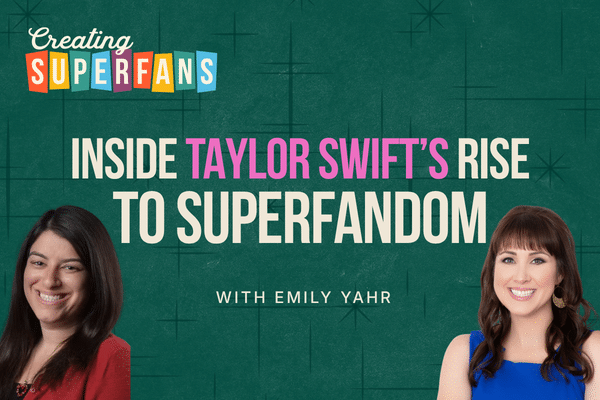
In this episode, Brittany welcomes back Washington Post pop culture reporter Emily Yahr to talk about her new book, Taylor Swift: The Debut Years, an extensively reported look at the early years that laid the foundation for Taylor’s extraordinary career.
After interviewing more than 100 people who knew and worked with Taylor during that era, Emily uncovered stories about the skepticism Taylor faced, the risks that helped launch her career, and the remarkable attention she paid to building genuine relationships with fans from the very beginning.
Brittany and Emily also explore how Taylor connected with an audience the country music industry had largely overlooked, why her deeply personal songwriting resonated far beyond teenage listeners, and the small, memorable moments that helped turn early supporters into lifelong superfans. Along the way, they uncover lessons that extend far beyond the music industry—from understanding audiences others overlook to creating emotional connections, making people feel seen, and recognizing that the smallest touchpoints can leave the biggest impressions.
In this episode, you’ll hear:
- Why so many people in Nashville doubted Taylor Swift early in her career
- How Taylor helped country music reach an entirely new generation of fans
- The role personal connection played in building her fan base long before superstardom
- Why “shake a million hands, make a million fans” became an early guiding philosophy
- What Taylor’s early approach to fandom can teach brands about customer experience and loyalty
- What Emily learned from interviewing more than 100 people for Taylor Swift: The Debut Years
- How Taylor made fans—and people across the music industry—feel seen and remembered
Learn more about Taylor Swift: The Debut Years here, or grab a copy wherever you get books!
Listen to the Episode
Listen on Apple Podcasts
Listen on Spotify
Watch on YouTube
Transcription
Brittany Hodak: [00:00:00] Emily, thank you so much for coming on the show
Emily Yahr: Hey, Brittany. It’s so good to be here
Brittany Hodak: I am gonna confirm this, but I think other than Alex, who works with me, I think you are the first ever repeat guest on Creating Superfans. So what I should say is welcome back to the pod
Emily Yahr: Thank you so much. I, yeah, I loved being here last time. We also talked about Taylor Swift, and I’m so excited to talk about her again.
Brittany Hodak: Yes. Well, I am thrilled because your brand-new book, Taylor Swift: The Debut Years, is out in the world. I have so many questions for you. Uh, the first one is of… So you, for anybody who missed it in the intro, you’ve been covering Taylor for well over a decade now, uh, with the Washington Post. What made you wanna zoom in and focus on the debut years specifically instead of either something that was going narrow into another part of Taylor’s life or career, or more broad, covering a wider range?
What made you so excited about covering the [00:01:00] early part of her career?
Emily Yahr: Yeah. Um, so in addition, so I’m a pop culture reporter at the Washington Post, and in addition to Taylor Swift being one of my favorite topics to cover, I also really love writing about country music. Um, that is a world that has just, like, always been really fascinating to me. I’m a country music fan, and so I’ve always really gravitated towards Taylor’s, um, you know, her early albums, her Nashville albums. And so I think this all kind of crystallized during the Eras Tour, um, even though I didn’t really, like, realize it yet. But I was at the first Eras Tour show covering it for the Post and, um, you know, every album of hers, like, had, had a special era in the concert. And at the time, um, on, on that first show, she played Tim McGraw, her very first single. And so we all kind of thought, “Oh, okay, this, like, acoustic, um, set is gonna be her, like, debut era.” And then as fans know, um, as she went on, Debut didn’t really, like, have an era, which is still, like, one of the big mysteries of the Eras Tour. But I think the, um, excitement [00:02:00] around her singing Tim McGraw and all the questions about, like, “Wait, why isn’t she singing about, like, her f- her first album, her first era?” Um, it kind of reminded me of how special those years were to people. And, um, now that she is this world-renowned pop superstar, I don’t know that that necessarily gets the same attention outside her fan base. So I think that was sort of where the idea first started, where I knew I wanted to narrow in on the country years.
Brittany Hodak: Well, we are, it’s 20 years this month, right? From the, the anniversary of that first album coming out, which fans all call Debut, uh, which is so fun that you said in the book, obviously, the, the name of the, the album was Taylor Swift. Is there anything that you learned or heard as you were reporting and writing this book that totally shifted your perspective, either of something that you had wrong, or fans have wrong, or something that just completely changed in your mind? Because I feel like so much of it has become lore, right?
It’s, over the past two decades there are so many things that fans say, “This happened,” or, “That happened.” Is there anything that you, as you were reporting it, [00:03:00] thought, “Oh my gosh, I had this wrong,” or, “Fans had this wrong for decades”?
Emily Yahr: I think, um, one thing that st- started to stand out to me as I started reporting this book, which I interviewed more than 100 people, um, who knew Taylor back then and worked with her, I think even if we didn’t get it wrong, I think it was I, and maybe other people, have sort of underestimated, but just how many people told Taylor Swift at the beginning of her career that it, like, probably wasn’t gonna happen, and it wasn’t gonna work.
Like, I think I was taken aback by how many people I talked to, even those who went on to work with her and had a lot of success with her, that were like, “Yeah, I mean, she was just, like, this teenage girl who only sang about boys. Like, we didn’t really think that there would be a big audience for that.” And so it’s, uh, it’s something that Taylor has talked about, and it’s definitely known that there was skepticism, um, when she was first starting out.
But just, like, I cannot emphasize the sheer number of people that told me they just, like, had so many doubts and, like, didn’t really think she would, like, go beyond her, her first album. So that’s something, yeah, I think I f- I thought a lot [00:04:00] about through the process.
Brittany Hodak: Well, and kudos to those people for admitting it because I feel like it would be easy for somebody to kinda have revisionist history in their retelling of, you know, “Oh, most people didn’t think she was going anywhere, but I saw that spark. I knew. I had faith in her. That’s why I wrote with her,” or, “That’s why I booked her,” or whatever.
Um, so I think it’s fascinating that so many people owned up and were like, “Yeah, I didn’t think it was gonna happen.”
Emily Yahr: Totally. Yeah, I was really surprised by that too, and like just such really interesting conversations that she even- she just changed so many people’s perspectives about like what a country music listener was. Because back in the early 2000s, like people in Nashville, a lot of them didn’t think that that would involve, um, teenagers or young listeners
Brittany Hodak: Yeah. So the other thing that I think is really important that I don’t think younger music fans really grasp is how different all music, but country music specifically, was pre-Spotify. And, you know, iTunes helped a little, but really [00:05:00] until recently, country music and country radio were synonymous. They were the exact same things.
The only music that sold, the only music that sold out arenas that people wanted to buy was what was playing on country radio. And country radio, by and large, was like what your mom listened to. And so early on, this idea of, you know, oh, getting teenagers to like country music, I don’t think it sounds as hard or as important now because it’s like, oh, kids listen to whatever they want.
But this is pre kids having the ability to listen to anything they wanted. So the idea that you would get a bunch of teenagers to all of a sudden have interest in what historically was not really for or by them is a really big deal that I don’t think unless people, A, lived through it, and B, have a little bit of an understanding of what the country music world specifically was like 20 years ago before Ella Langley could just, you know, have a bajillion streams and have a, you know, 20 whatever week number one on the Hot 100.
Like, [00:06:00] that did not happen in the early 2000s
Emily Yahr: Totally. I think that’s such an important point, and I think that’s something that Nashville executives at the time, like, that’s what they really thought a lot about. Um, you know, they were told that the primary audience for country music, which, like, like you said, country radio listeners, um, was, like, a 30-something mom driving her kids to school or, like, running errands.
And so that’s who they were thinking about when they were signing artists, when they were thinking about what might work for an audience. Um, and that’s when Taylor came along. They’re like, “Well, moms aren’t… Like, why would they care about, like, teenage drama or things that are going on in high school?” And so the fact that they didn’t really think about those younger listeners or even start thinking in a way about how the internet was going to change everything, which was really, like, social media, MySpace was first starting to really, um, become a thing, like, when Taylor was coming up.
The fact that they didn’t really think about that, I think, kind of limited in who they thought the audience would be and why Taylor faced so many doubters, um, at the beginning.
Brittany Hodak: Uh, there, I’m trying [00:07:00] to remember now. I should have marked this. I can’t remember if it’s something that you said. I think it’s something that you were repeating that one of Taylor’s collaborators had said to you, was that when they started to realize the miscalculation, it was the fact that even though adult women were no longer teenagers, they still had those emotions and still connected to those feelings.
Can you talk a little bit about… I’m sure you probably remember, like, who this came from and where it was in the book. Um, so just talk a little bit about that, ’cause I think that’s also such a great insight for anyone trying to sell anything. Like, whether you are in real estate or finance or packaged goods, or you’re trying to, you know, help somebody become a global superstar, having that insight of we still remember who we used to be, and that still drives us emotionally and from a decision-making standpoint, was a really cool insight that you had in this book
Emily Yahr: Thanks. Yeah, that, that stood out to me too, and that wa- that was a man who, um, I believe was, like, in the songwriting world, and he actually did think, like, he was, I remember, one of the [00:08:00] people, um, who thought that Taylor actually could find, like, a younger audience. Like, maybe these people are out there, like, a t- teen girls, like, really liking her. But he didn’t think about the fact that, um, even women in their 30s and 40s, you know, who are driving their kids around, hear these songs about first loves, high school, um, friendship, and, like, really connect to them, and, like, have all this nostalgia and wanna hear more of it. And so that was something he also, like, kind of admitted.
He’s like, “That was something that I, like, as, as a man, like, didn’t, didn’t really think about how powerful those emotions are, and hearing someone sing about it, even if you’re not the same age. Like, that’ll take you right back, and that’ll, that’ll really connect to your music.” And, and later on, um, you know, as Taylor’s music started becoming more popular, there were female radio hosts who said that to her, that was like, “I can’t believe, like, I’m so much older than you, but hearing you sing about my life, like, back then, like, y- you just, you get it.”
And, and that was also, yeah, like, she didn’t just appeal to, to young listeners. She appealed to everyone, and that, and that was something people didn’t expect at first.
Brittany Hodak: Yeah, [00:09:00] I love that. And kind of a second marketing sales lesson in there too. One of the things I talk about all the time is superfans are created at the intersection of your story and theirs. And when you can use, whether it’s nostalgia or vulnerability or anything else in telling your story, people are gonna see that, they’re gonna identify themselves in it.
Because even if she’s singing about a totally different hometown, a totally different boy, a totally different whatever, it’s easy to hear that and find yourself in it even though the details don’t match. Like, the details can be different, but the emotion can be the same
Emily Yahr: Definitely. I think that was something Taylor tapped into maybe without even realizing it, because she was just really singing about her own life. Um, but yeah, I think also when you’re a, someone who is a teenage girl, um, you do kind of, and this was something I heard a lot, that, like, you’re not really used to people taking your emotions seriously. And so to hear an artist that not only was taking those emotions seriously, but also being like, “I’ve been there, too. Here’s how I’m articulating these feelings and, like, how to deal with them,” um, that was also, like, a really [00:10:00] powerful thing that connected a lot of people to her right away
Brittany Hodak: Yeah. And, you know, I want, I want you to talk a little bit about sort of the, the early Taylor days. I mean, you write about, uh, in the book her decision to walk away from RCA to, you know, take a, um, take a flyer with this, like, brand-new unknown, unproven label in Big Machine. We all know how that story ended, but, you know, it was really cool reading about how that, how that story started.
And to the point that you just made, one of the things that I have to remind myself about a lot as a parent to my own kids, who are six and nine, is that those em- emotions that feel so big, that would be so easy for us to dismiss ’cause we, we know, right? We, like, see the bigger picture. They can’t zoom out.
Like, that is their whole world. That thing that happened at lunch or recess is, like, the only thing that matters. And I think there’s something to be said about the fact that not only did Taylor make those teenage emotions unapologetically larger than life, like it was okay to make them big and put them on display for [00:11:00] people to say, “Oh yeah,” like, “that is significant.
That does matter.” But there was also, I think, kind of a brave decision by all of those around her to let it be marketed that way. Because I think, you know, even if you look at some of the sort of, like, rise of the tween economy with, you know, like the Olsen Twins and what was happening on, you know, Disney Channel and Nickelodeon and some of these things where people were starting to realize, like, there is money to be made in this au- audience, in this segment.
It still wasn’t about the feelings at the center of it and putting, you know, that, like, young performer at the center of it. So I think in some ways you could say it was, like, a pretty cool either experiment or leap of faith by the ones around her who were, you know, writing and cashing some of those checks to make it happen.
But I would love for you to kinda talk about everything that was going on behind the scenes leading up to what would set the stage for the superstar we all later knew as Taylor Swift.
Emily Yahr: Yeah, I mean, this was something that I had heard a lot about, [00:12:00] like the fact that she had, had this development deal with RCA when she was 13. Her family didn’t even live in Nashville yet. But when her parents kind of realized that she had this, this talent and this, it, you know, it was just all, her dream was to move to Nashville, become a songwriter, um, and they were very, very supportive in, in helping her do that. Um, you know, she had this RCA deal, and her whole thing was that she wanted to write her own songs, and RCA, uh, you know, they, they thought she definitely had potential. They were impressed by her, but they maybe, like, didn’t quite see the vision yet. And this was something I was, like, really glad I actually got to talk to the executives at RCA at the time, who were great about it.
I mean, obviously, you know, in retrospect, like, they wish they had probably made some different decisions, but kind of like, who could possibly have seen, like, where this was going? Um, so it was interesting to kind of dive into more of the behind the scenes of that and then follow her move to Big Machine, um, which, you know, as, as the story goes, like Scott Borchetta, he was, he was, like, a very powerful, like, [00:13:00] radio promotions person.
He worked at Universal. He wanted to leave and start his own label. Um, but when he made this pitch to Taylor to sign her, the label hadn’t even started yet. And that was, like, one of my favorite things to report, actually, was how close Big Machine was to not even happening. Like, the fact that all these pieces fell into place was, like, even more of a miracle than I realized, just because, you know, it’s, like, kind of impossible to start a successful record label on your own.
It’s incredibly difficult. And, um, if there were not from some very key people, um, especially this one, like, multimillionaire from Pittsburgh, who was also one of my fav- my favorite people I talked to, who made, like, an investment kind of at the last minute, Big Machine, like, wouldn’t have even gotten off the ground.
So as Taylor was launching her career, like, she wasn’t, she wasn’t doing it, yeah, with an established label. Like, she was going with, uh, Big Machine, and obviously Scott Borchetta had been around a long time. Like, he knew a lot of the right people. But it was still just like, I mean, as Taylor has talked about, there was like, still you could smell the new paint on the walls of the label.
They were stuffing CDs [00:14:00] themselves to send them out to radio. So, um, yeah, it was kind of like two challenges of, of launching this career, but then also launching this label. But the, uh, combination of both of them proved very powerful and, um, yeah, just, just took off, I think, faster than anyone expected.
Brittany Hodak: What was it about the interview with that investor from Pittsburgh that you enjoyed so much?
Emily Yahr: Um, I think it was just, it was just funny to hear him sort of talk about, you know, he, uh, worked at… He, like, had made his, his money, um, in, like, mortgage services in Pittsburgh. He had, like, no experience in music or the music industry at all. but he had a cousin who, like, wanted to be a country singer, and so he’s like, “Sure, I’ll, like, try to, I’ll try to figure out, like, how this country music world works.”
And so he, like, by a lot, like, some connections, like, got connected to Scott Borchetta, and then just, like, really liked what Scott had to say and was like, “Sure, I’ll invest in your label.” And he just, like, he didn’t… He just kind of thought it would be, like, a lark, like a fun, a fun thing to do, like, not even realizing like, what he sort of set in motion.
And so it was just fun to hear from someone who, like, really didn’t go in [00:15:00] with, like, many expectations, but then inadvertently became part of this just, like, now the most famous pop star in the world. Like, he was such a key part of her story, who she actually thanked in the liner notes of her first album.
So that was just fun because that was, like, such an important part of the story, but, like, no one really knew it yet. And without him, like, the label, Scott Borchetta has said, like, it, there’s a good chance it wouldn’t have happened
Brittany Hodak: Well, that’s such a cool story, and I know you said before you interviewed over 100 people for this book. And I just have to say, as an author, I so appreciated that level of commitment, not only because you uncovered so many rich stories, but because, let’s be honest, not everybody who writes a book is a reporter and is doing the due diligence to have these conversations to make sure that everything is well-researched and fact-checked.
And so I think to have not just an account of these years, but a definitive account that we know is not sort of like rumors and speculation was really, really cool. [00:16:00] So thank you for that. And also, I noticed somewhere in the book, I think maybe towards the end in your acknowledgments, you said that you interviewed over 100 people, but something like 150 people had told you no.
And I was like, and I know you, I know that you, um, can, can, like, handle somebody telling you no. Uh, like I, I, I know that’s part of it. But I also know how many people would’ve given up on a project if 150 people either told them no or ghosted them. So I want you to just talk a little bit about, like, the human side of that, of what did it feel like to have 150 people not respond to you or respond to you and then ghost you later or, you know, just all of the things because I think that’s a cool human part of what it takes to make a book like this come out into the world.
Emily Yahr: Yeah. Oh, well, thank you for saying that. Um, that is, yeah, that was a big part of this process, which I knew going in. Like, I knew it was gonna be really hard to find, um, people that would talk to me, and I’m, like, so thrilled that I was able [00:17:00] to, uh, you know, get to more than 100 people. But, you know, the Taylor now is very different than the Taylor I was writing about when she was so accessible.
Like, now she’s one of the most powerful people in the world, and even if you only have, like, the nice things to say about her, like, some people, like, still get scared, you know. If, especially, you know, it’s something that she is not, like, personally producing. Like, that was a question I got a lot was, you know, “Is this book, like, officially, like, sanctioned by Taylor?”
That kind of thing. Um, and I was like, “Well, I told… You know, sent emails, I’ve sent letters, like, you know, to her, to her team, um, to her publicist. So, like, you know, but I would still, like, love to hear, like, your perspective.” And that was something I loved, was hearing other people’s memories and perspective of her. But, um, you know, for some people, that meant they, they didn’t wanna talk to me. And so it was definitely hard, especially, like, it felt like it happened in waves sometimes. Like, I would just send out, like, a ton of emails, a ton of texts, or even, like, approach people in person, and they, you know… Most of them were very nice about it, but they, they just said no, that they weren’t gonna talk. So that was, like, a very frustrating part [00:18:00] of the process. Even if I, like, knew going in and I understood, uh, that was still… You know, it did, it did feel like a real setback. And then it felt like even when I was like, “Okay, great. Like, is anyone gonna talk to me for this?” Then the next day, like, five emails would roll in, like, from people, like, saying yes, and that was so great because I love interviewing songwriters. I got to talk to a lot of songwriters for this, and, like, producers and oth- people from other parts of the industry that I didn’t even know as well. So it just felt like, yeah, the minute that it felt like, “Okay, like, how is this gonna even work?” Then something would happen and be like, “Okay. Like, people are interested.
Like, people do wanna share their stories.” But yeah, as, um, any re- reporting, like, a major project, like, it, it was a real rollercoaster
Brittany Hodak: So I, I should have asked you if you’re cool with me asking this question or not, but we’ll just see. Uh, I know you love Nashville, and I know you report on Nashville and country music in addition to Taylor, who obviously for a while was sort of an outsized part of that story. Was there anything that you were told or heard while you were reporting that [00:19:00] you got seed for another book or thinking?
‘Cause I’m just thinking about how much Nashville has changed over these, you know, past 20 years, and especially during the period you r- wrote about. And I’m sure you heard so many great stories from executives and songwriters. So was, were, at any point were you like, “Oh, I’ve gotta write this down and save it.
Maybe it’s not right for the Taylor book, but for another project later”?
Emily Yahr: Ah, that’s a good question. Yeah, there were… Like, that was also one of my favorite parts, is when we just- I got to talk to all these people, and then we started talking about, like, non-Taylor-related things and, and just about country music. So I definitely have thought about it, ’cause you’re right, like, Nashville has changed so much, really, yeah, in these last 10 years.
Um, I think a lot is, is so different now, just, like, even, like, writing about… I, I write sort of about… My, my hot take about the bro country era is that Taylor Swift, like, led to bro country. So even that, like, sort of got me thinking about the different, like, yeah, kind of phases that country music has had, and how that would be fun to write about.
So that’s definitely something I’m, like, mulling now.[00:20:00]
Brittany Hodak: Okay. All right. Well, TBD. You promise you’ll come back and talk about the next book if you,
Emily Yahr: Yeah.
Brittany Hodak: something else?
Emily Yahr: Absolutely. Yeah, we can talk about non-Taylor Swift-related things, too.
Brittany Hodak: Perfect. Well, for right now, all the attention is on this book, as it should be, because it’s so good. And one of the through lines, of course, through any Taylor project is always going to be about the fans. And I love that you talked about the fact that from before day one she was laser-focused and had this innate understanding of what it meant to truly connect with your fans.
And, you know, obviously that’s served her well over the past 20 years. So I’d love for you to talk a little bit about that and some of the fun stories that you heard as you were reporting for this book.
Emily Yahr: Yeah, that was, that was something I knew I wanted to focus on because I feel, I think that’s such a big part of the lore is her early connection with her fan base, and going on MySpace and, like, replying personally to people, and getting all these fans, um, so early on, you know, even before she was having much radio success, um, before her, her singles started really breaking out. Um, so one of my favorite [00:21:00] chapters was talking to five people who just had, like, really extraordinary experiences with Taylor, or just ones that, that really stuck out to me. Um, either people, you know, that she, like, wrote personal notes to that were really, like, affected by her words, or, um, one of my favorite stories when she showed up at this one fan’s, um, bridal shower, um, which it was great to talk to her, like, all these years later about what that was really like.
But yeah, it is Taylor in the… This is, um, I believe still a, um, or sorry, uh, one of the, my favorite quotes that I heard a lot, um, was about a slogan that Taylor kind of really went by when she was first starting out, which she credited, um, an early manager of hers for telling her, um, which was, “Shake a million hands, make a million fans.”
Sometimes it was, “Shake 500,000 hands, make that many fans.” Um, and she really abided by that. Like, she genuinely believed that the more personal connection, like, that you make with people, they will stay loyal to you. And so that is why [00:22:00] she, after shows when she was opening for these big artists, she would stay for hours after the concert and meet every single person that stood in line to meet her, and sign every autograph, and stop no matter what she was doing to meet a fan, ’cause she really believed that that human connection, um, would mean a lot to people and stick with them.
And I think it’s safe to say she was correct.
Brittany Hodak: Uh, she absolutely was. And it’s funny, I loved reading that part of the book because Taylor said something very similar to me the first time I ever met her, and it was the night she won the CMT Award for Breakthrough Music Video of the Year for Tim McGraw. And she was at an after party with Tyler Hilton, who starred in the next video that she did.
And I knew Tyler because I’d interned at his label in college, and we were talking about everything she was doing on MySpace, and she recounted a very similar thing to that. She was like, “I wanna sell a million copies of this record. And I know in order to do that, I have to make a million people care about me ’cause they’re not gonna care about my music if they don’t care about me, and they’re not gonna care about me if they don’t know me.”
And, like, that was the point where I remember thinking, “This girl’s gonna be a superstar.” And she [00:23:00] was, I don’t know, I think she was 17 at that point. And the record had sold maybe half a million copies at that point, so it was obviously, like, working very well. So, uh, yeah, and I think anybody paying attention to her career can see that she still embraces that.
You know, maybe she’s, maybe she’s upgraded it. Maybe it’s, you know, shake a billion hands, make a billion fans at this point. But clearly the, the strategy has worked
Emily Yahr: Definitely, and it made fans, even like people in the industry too, like I talked to a lot of journalists and radio, um, people back who worked back then and just have, again, these very vivid memories of meeting her, and she was just so unlike any other singer. Like, she really did go above and beyond, and like one of my favorite story…
You know, I read about her on her first radio tour, which was, you know, such a critical part of building her career, and, um, this one DJ who talked about how she came in to visit, and she kind of just like heard some office, not even drama, but just like some op- like happenings that were going on in the office, and she was like, “Do you have like an empty conference room for me?”
And [00:24:00] they’re like, “Sure.” And so she like went in this room, came out 20 minutes later, and she’d written like a, like a short song about whatever was going on in the office, and they, um, still talk about it like at this radio station to this day. So, um, that was something they never had seen before. And so she knew that even these, um, you know, people in the industry, you know, they…
Like, she had to stand out in some way, and this was the way to do it by, yeah, like making that, that personal connection, and, and that really also worked.
Brittany Hodak: That is such a fun story that I had not heard. And again, I think unless anybody was paying attention or lived through or worked close to country radio back then, it is impossible to overstate how important radio tours were. Because again, the only way you got famous at that time in country music is if you were on country radio.
And a big part of it was going one by one to the thousands of country music radio stations across the country and, you know, lobbying for your song to be played
Emily Yahr: [00:25:00] Yes, I could talk about radio tours forever. Um, that was one of my, actually my favorite stories I’ve ever written for the Post, was when I got to follow Carly Pearce, um, around on her first radio tour when she was promoting, um, Every Little Thing. And it w- it was just for a day, but by the end of the day I was exhausted, and I was like, “I don’t know how singers do this for, like, months on end,” because it really just is like having multiple job interviews, like, every single day of your life, except it’s then super personal ’cause these are often songs that you have written. And so yeah, Taylor had to do that, too, and, and she was really good at it. Like, the radio, uh, personalities, like, really connected to her, so she j- she kinda just kept going, and, and that was such a big part of what got those first songs, um, really to blow up. ‘Cause actually a few of them did say to me, like, they weren’t totally sold on Tim McGraw at the beginning. Um, and even the research, like, wasn’t showing that it would be, like, a big hit. But Taylor just seemed so promising as an artist, like, as a person, that they, like, wanted to give it another listen. And so they, you [00:26:00] know, kept playing her music. Her fans were writing in on MyS- uh, you’re, you know, they were calling the radio station.
She was urging them on MySpace to do it. So it was that, I think the tour that made such a big impact, that even if they had hesitations at first, they gave her a shot, and then, you know, the rest worked out very well.
Brittany Hodak: I think it did. Yes, that might be the understatement of all time. So I love that you mentioned the Carly Pearce story because the next thing I was gonna ask you is I’m sure, I, I think you said you’d written over maybe 100 stories for the Post in your career about Taylor or about country, and I’m sure you went back and revisited a ton of those in your notes and everything else.
Were there any favorite stories or articles that you went back and sort of revisited or looked at again as you were preparing for this book?
Emily Yahr: Um, I think, well, one of my favorites, even though it was, like, a more recent, um, story I wrote around when the Midnights album came out, just, like, how Taylor, um… how the, kind of, the… It started that fans became [00:27:00] so obsessed with finding, like, clues and hints and Easter eggs, like, in her work, and where that really all started. And that was fun because… Well, first I got a quote from Taylor, which remember was very rare at that point. It was like, yeah, right when Midnights came out and she, um, or her, you know, her publicist, like, emailed me a quote from her when I asked about this, and clearly it’s, like, a very important, um, thing to her. So it was cool to hear, like, how that all started, because that’s become such an important part of her, of her lore, of her, of her music, is, is fans, like, decoding everything. Which she just, like, poked fun at herself, like, when she was at the Emmys a few weeks ago. Um, but I also… I thought I had… It was fun to talk to fans about it because, like, even if they know that, yeah, probably, like, nothing is really happening or they’re finding clues that aren’t really clues, it’s just so fun for them.
And, like, this one quote I thought a lot about, and goes back to how Taylor, like, built these connections, was one of the fans told me that when fans are trying to, like, decode what she’s doing next or fi- trying to find these clues, it’s like they’re all playing the game together. And even [00:28:00] as Taylor gets so famous that she can’t really interact with her fans in the same way she used to, it still makes them feel like they have, they have this connection together.
So that was one that I definitely went back to. And then I think another one I did about how, um, if you think Taylor Swift only sings about her exes, you don’t know Taylor Swift. And it, like, kind of was a deep dive, like, into some of the other themes that she has about throughout her career and written songs about, what even though, like, her broader reputation is still, like, “Oh, she only sings about her breakups.
She only sings about, um, you know, guys she’s dated.” Like, there’s actually a lot more going on. So that was kind of… That was good to, like, go back and, and sort of see those broader themes, too.
Brittany Hodak: Well, it’s so fascinating, and it must be so strange and isolating and bizarre as Taylor to live your life as not just a brand and not just a billionaire, but somebody who sparks incessant content by other people. And, you know, with the, the four songs that came out for the, The Show girl encore a [00:29:00] few weeks ago, just the, like, incessant chatter of everyone having an opinion about, you know, “Is this the best thing she’s ever written?
Is it the worst thing she’s ever written? Has she lost the plot?” This or that. Like, it must be such a bizarre experience to know that at any given time there are not, like, a few, not like a few thousand, but millions of people literally creating and sharing content in real time with their opinions about you.
Like, what a, what a interesting phenomenon that we’re all sort of watching happen to this human person.
Emily Yahr: It really is. Yeah, I think about that too, of just, like, what that must be like. I mean, even as a reporter, when, like, sometimes I’m like, “Ugh, I’m not gonna read the comments on this story,” or I’m not gonna… And like, imagine the entire world is like, yeah, weighing in on, on every single, like, all of the minutiae of your life.
Like, I don’t know how you can, um, do that and still function, and I know she’s talked about how she doesn’t really, like, look at that. Um, it seems like she does kind of know what people are saying about her, so maybe she has people, like, show her this. But yeah, um, I was thinking a- [00:30:00] about that a lot with those four songs she released, um, recently with The Showgirl Encore, and how just, like, instantly there was just, like, just ev- discourse of every kind you could possibly imagine.
I mean, I, I do think it’s interesting to, like, read online what people are saying or if people… Yeah, I know, um, you know, the songs were very divisive. Like, some people really did not like them. Some people, like, thought they were great. Um, there were a lot of fights happening. But then just, like, in the real world when I was, like, talking to people, you know, over the weekend who listened, they’re like, “Oh, yeah, it was pretty good.”
And so sometimes I think s- the internet like just makes things seem like so much more inflamed than they really are. Um, and then people maybe, yeah, that listen more casually are like, “Oh, yeah, like Cleveland was pretty catchy.” And I was like, “Oh, okay. Well, Twitter seemed to think differently,” or at least there were a lot more fights about it.
But yeah, again, like, to have the world be debating everything you do at this level, I don’t, I don’t know. I can’t imagine what that would be like.
Brittany Hodak: I, it must be so weird. And, you know, I know she many times has said, like, you know, “I tell every artist, ‘Don’t read [00:31:00] the comments,’ and like, ‘You can’t look at the comments, and you can’t look at the comments.'” And then every now and then it feels like she drops a song that’s, like, just the comments, and we wanna be like, “Girl, stop reading the comments,” right?
It’s a, it’s a nice little, uh, nice little juxtaposition there of sort of like do as I say, not as I do.
Emily Yahr: Yeah, I do, but I would… I think she has, like, said that people around her will, will bring her things. So, um, that’d be interesting if they’re not only bringing her, like, the positive things ’cause she, you know, in, in the song Cleveland, like, addressed, like, a lot of
Brittany Hodak: Yeah.
Emily Yahr: specific, like, online criticisms about her.
But,
Brittany Hodak: It’s like it feels like you looked at the comments. You or someone on your team
Emily Yahr: like, “I’m not gonna check.” And then I’m like, “Well, I guess I’ll check, like, now,” just, just for a few minutes, and then I usually regret it. But, um, and then sometimes it’s a pleasant surprise, so you never know. But I feel like I’m the same way where I’ll, I’ll, like, say that and then you just, you can’t resist.
It’s, it’s just human
Brittany Hodak: Well, how does it feel knowing that there’s a very real chance that Taylor is going to read this book and have an opinion on this book in the very near future?
Emily Yahr: Oh my gosh. I, like, I [00:32:00] don’t even know. I mean, I think she, I think, I hope she does read it. I think she would really like it because I think it would probably, like, remind her of a lot of things that she’s forgotten, and that was, like, actually a comment I got from a lot of people I interviewed where they hadn’t really, like, thought about these stories in a long time, and it was kind of fun for them to revisit, like, you know, working with her or meeting her back in the day or, or just seeing her rise, like, in Nashville and being so close to it.
So I know. I’m not, I’m not really expecting her to read. I feel like there’s so much, there’s so much written about her. I’m not expecting it, but I think if she did, I think, I think she would enjoy it.
Brittany Hodak: Well, I think she would enjoy it too, and I think everybody else is gonna enjoy it. Um, w- so I’ve been in Nashville now for the past 10 years, and one of the things that I was reminded of reading this book is how often… And I worked in the music industry, so maybe this isn’t everybody’s experience who lives in Nashville now.
But it’s very common for me to be at a lunch or a party or whatever and just having a conversation about something else entirely. And because Taylor is always kind of, you know, in the news [00:33:00] cycle, it seems like there’s always something going around, somebody will just tell an off-the-cuff or oh, by the way, or a memory of something, and it’s always about…
It’s in the generosity, right? It’s always about the like, “Oh, my daughter still has this guitar Taylor painted for her when she was born,” or, you know, this, this crazy scrapbook that Taylor made for my niece, you know, 20 years ago or just, like, all of these stories. So I would imagine there are so many of these things that you report on that Taylor has forgotten about because it seems like, by all accounts, she was always sort of just spreading that love and joy to the people around her all the time, to the point that it would be, I would imagine, impossible to remember all of those things and all of the details of, uh, some of the depth in this reporting of, of the debut years.
Emily Yahr: No, definitely. And that’s why I was so glad I got, um, I took, like, temporary leave from work and went and relocated to Nashville, which was really the only way to do this, um, just because I feel like the best way, um, you know, to [00:34:00] show people in Nashville that you are, you know, trustworthy, they should talk to you, is to, like, show, like, how much you care about, about the city, about the industry, about country music.
Um, being there was so critical, but, uh, you know, for logistical purposes, for interviews. But then, yeah, also exactly the same thing where I would just… I wouldn’t even be, like, looking to do any work or, or doing reporting, and I would hear stories about Taylor. People would just, they’d hear I was working on the book, or it would just come up, like, kind of organically.
And so sometimes they’d be like, “Oh, hey, could I, like, interview you? Like, that sounds like a great story.” But it, it was, yeah, like, kind of shocking, like, just how many people these stories. And like you said, they usually always involve something, like, so over the top, like, like pe- she just went above and beyond to, um, yeah, really make people feel seen or to give them some sort of memory.
And once you start talking to people there, as I’m sure you’ve seen, like, the stories just start pouring out. So it was really great to, like, be there through this process.
Brittany Hodak: I would say any time the story isn’t about her going above and beyond or being generous or about just being, like, [00:35:00] wildly talented, um, it’s about her humor because she is known to be not just a, uh, really quick-witted person, but a really funny person. And, uh, I wanna invite you, if you want to, to share one of the stories that you shared in the book about Taylor’s humor because I know everybody listening to the podcast would enjoy it.
Do you know the one I’m talking about?
Emily Yahr: Yes. Thank you for asking. So this is the, the one time that I’ve, I’ve met Taylor, ’cause I was saying in the book, like, by the time I kind of, I started really writing about her, um, at the Post, it was, like, pretty hard to get an interview with her. Like, she was already, like, a global superstar. but one, the one time I did meet her, um, it was in 2018 when she came to DC for the Reputation tour, and I was invited to, like, meet her backstage.
Not, not as an interview, just, like, as a quick hello and kind of just, um, you know, which was helpful for me. Just anytime you can meet, um, anyone so famous in person, it’s like, feels very important. So, um, I wanted to go meet her, but, uh, the one thing that I said, because, um, at the Post, like, I [00:36:00] maintain this rule that I, I don’t take pictures with celebrities that I write about, that I cover. Um, and this does come up in Nashville a lot, where, like, at the end of an interview with a country singer, a lot of times it’s like, “Okay, like, time for the picture now,” and I always have to very politely decline and just say, like, “You know, my… I’m a reporter, my job is to be objective. Like, I can’t really take, like, a fan picture.” Um, so but I knew, like, Taylor, you know, I’ve seen so many journalists or just people in general with photos of her, and I was just… I didn’t wanna have an awkward situation. Like, so I just kind of said up front that I, you know, wasn’t, um, allowed to take a photo with her and just wanted to make sure that was okay.
And they’re like, “Yeah, that’s totally fine.” Um, so when the day arrived, like, I went and I was- I brought another friend, a journalist, um, with me, and we, and we ended up talking to Taylor for about 20 minutes. It was, it was a really, really interesting conversation. We also talked about country music a lot, which was great ’cause it was cool to see her just sort of light up when I asked her about this.
But then, um, as, as we were, like, wrapping up the conversation, you know, she had to get ready to, like, perform in the stadium, and, you know, uh, her, you know, the [00:37:00] publicist were just kind of like, “Oh, thank you so much. Like, it was great to meet you. Like, you know, it was kind of like last call for a photo if, if you want one.”
And, and Taylor, you know, offered to, and I was just like, “Oh, you know, sorry. Like, I, I can’t, but thank you so much anyway.” And Taylor just, um, you know, she starts walking away, and then she just turns back around and, and just goes, “Yeah, sorry about your ethics,” and then walks away, and it’s still, like, the funniest thing a celebrity has ever said to me.
Like, my friend and I were stunned into silence. And, um, so I just felt that is, like, the opening anecdote of the book, and I just felt like I had to put it in because it did relate to country music. Like, we did talk about it a lot, but also, like, “Sorry about your ethics” is, like, a quote I use, like, constantly.
And do agree, like, Taylor, yeah, like, I do think her sense of humor is overlooked a lot, and she does have this, like, very dry, uh, sarcasm about her that is also hilarious. So, um, yeah. I don’t know if aft- when this book comes out, “Sorry about your ethics” can become a catchphrase, but I hope it does.
Brittany Hodak: I mean, I [00:38:00] personally want it, like, needle stitched into a pillow that I can keep in my living room. And I think every other, not just Swiftie, but, like, I mean, let’s be honest, that’s just, like, a sick, a sick burn for anybody. Like, sorry about your ethics and a funny thing. Like, I, I, I’m gonna start using that all the time.
And it’s funny, I’d, I, I, you, you told me that story and I’d forgot about it, and it was just as funny rereading it as it was, I don’t know, eight years ago or however many years ago after it happened and you told me about it. So, um,
Emily Yahr: So glad you liked it. I need to perfect, like
Brittany Hodak: about your ethics
Emily Yahr: in a story now, but like, it was- I’m so glad I got to include that. And, um, yeah, that, that seemed to be… Everyone that has read the book or like got an early co- like, uh, well, just they’ll text me like, “Sorry about your ethics.” I’m like, “Yes, it’s spreading. It’s hilarious.”
Brittany Hodak: Yeah, your ethics probably prevent you from profiting off that, but, like, not everyone is held to those same ethical standards. So somebody will have those available on Etsy probably by the time this interview airs.
Emily Yahr: Amazing.
Brittany Hodak: All right. Well, Emily, thank you so much for joining me today. Tell me where everyone can find this incredible [00:39:00] book
Emily Yahr: Um, you can find it really wherever you order books. Um, it is al- also available as an audiobook, which I was very excited. I mean, I have an amazing, um, voice actor who, who recorded it, but I got to record the, the prologue and the last chapter, which was a lot of fun. Um, and yeah, I’m really, really excited to see what people think.
I mean, all I ever wanna talk about is, like, Taylor Swift and early 2000s country music, so this is, like, really combining two of my favorite topics, and I would love to hear people’s thoughts
Brittany Hodak: Well, your love and your passion comes through in every page. Guys, pick it up whether you get the audiobook or the real one. I promise you will be a super fan of the book and of Emily
Emily Yahr: Thank you so much. This was so fun
Brittany Hodak: It was? Okay. Yes, I will stop recording now. Look at us right at
Paragraph