


Episode Summary
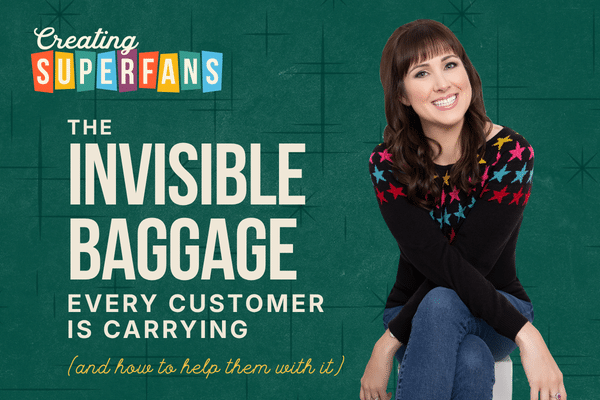
Your customers aren’t starting on page one. They’re starting on page 161.
Every prospect and customer enters an interaction with a backstory—past experiences, disappointments, assumptions, and expectations you may know nothing about. And sometimes, that means you’re working to overcome a trust deficit you didn’t create.
In this solo episode, Brittany gets personal, sharing her own experience of finally hiring a stylist after years of feeling overwhelmed by fashion, frustrated by past service providers, and hesitant to make a big commitment. What started as a solution to a very specific problem became a powerful lesson in what it takes to earn the trust of a skeptical customer.
Brittany breaks down five practical ways businesses can help customers overcome an invisible trust deficit:
- Make the first “yes” smaller by reducing the risk or commitment required to get started
- Make the invisible visible so customers can clearly picture what working with you will actually look and feel like
- Ask about the baggage to uncover the assumptions and past experiences shaping their expectations
- Teach, don’t just tell so customers walk away more informed, confident, and empowered
- Rewrite their expectations by creating an experience that changes what they believe is possible
Whether you work in sales, service, marketing, or customer experience, this episode is a reminder that you’re never interacting with a customer in a vacuum. They’re comparing you not only to your competitors, but to every great—and terrible—experience that came before you.
When you understand the invisible trust deficit and intentionally work to close it, you can turn hesitation into confidence, confidence into loyalty, and ultimately, customers into superfans.
Listen to the Episode
Listen on Apple Podcasts
Listen on Spotify
Transcription
Brittany Hodak: [00:00:00] Hey, I’m Brittany Hodak. Welcome to another episode of the Creating Superfans podcast. Today is gonna be a little different. I, if I’m honest, am gonna open up in a way that I kind of can’t believe I’m doing on this podcast, uh, to share a couple of personal experiences and stories because I think it’s gonna be really helpful for everybody listening, regardless of whether you’re in sales, service, marketing.
You maybe have had experiences like this before, but I really wanna help you understand something that we oftentimes don’t see, and that’s the invisible trust deficit that a prospect or even a customer brings into a relationship with us. I was laughing as I was outlining this episode ’cause I was thinking about how many country songs, like the whole premise of the song is somebody is in a relationship, either at the beginning or midway through, and the other person is singing the song, like, “Who messed you up?”
Like, who damaged you? What did you bring into this relationship? , But I don’t think we talk about it a lot in terms of what it means for [00:01:00] selling and what our customers may be coming into a relationship with.
So in this episode, I’m gonna tell you some stories. , I’m gonna walk you through something that, again, this is the part that I’m like I can’t believe I’m talking about this on the internet, but something that I have been doing behind the scenes for the past few months now and how this has kind of like changed the way I think about some things.
And then I am going to give you five practical take- takeaways that you can implement, again, whether you’re in sales, service, marketing, whatever you do, that are going to help you overcome the trust deficit that you may see, you may not see with your prospects and customers to hopefully turn them into superfans because remember the thing we talk about all the time on the Creating Superfans podcast is if your customers aren’t telling their friends, you’re in trouble.
All right, let’s dive in So I have never been, like, a fashion girly. I hate having to pick out clothes to wear on stage dozens of times every single season. [00:02:00] I go on, like, physical stages in front of people about 65 to 70 times a year, and that’s not counting interviews and podcasts and all the things I do myself and everything else that puts me on camera.
But in terms of just walking out on stage, whether it’s in front of hundreds of people, thousands of people, dozens of people, that is usually, like, five or six times a month on average. And in my busy months, which are, like, January through March and then September through November, sometimes it’s 10 times a month.
And so for somebody who’s not super into fashion, I feel a ton of anxiety around that because people are taking my picture. They’re posting pictures on LinkedIn and Instagram, and while it’s so kind and I love that people are saying, “I loved your keynote, I loved your message,” on the receiving end of it, as a human, I’m like, “Oh my gosh, I can’t believe somebody posted this photo” or, “This is so unflattering.” So anyway, the reason I’m sharing [00:03:00] all of this is because a topic of conversation a few times over the past few years has been, should I hire a stylist?
And the reason I had never hired a stylist before is because it felt incredibly overwhelming. As somebody who does not like fashion, is not into clothes, if it were up to me, I would just have, like, one vintage-looking shift dress that I could wear every single day. Like, think Samantha from Bewitched vibes.
Like , I just want, like, a simple, classic… Would somebody maybe think I was a stewardess from the 1960s? Maybe so. Give me the TWA stripes, like, whatever. Uh, that is a vibe I wish I could go for. Um, but instead, I constantly And like stress buying clothes or a client will say, “Can you please wear this color?”
Or, “Our theme is this,” or whatever, and I always wanna be accommodating, especially because I talk about customer experience. But that compounds, right? When it’s like a week before the event and the client’s like, “Oh, can you wear [00:04:00] purple? Oh, it would be great if you could do this. Oh, you could be… You know, could you do this?”
And then that like sends me into a spiral. So, um, over the years, I, many times, have thought about getting a stylist, and it’s always been a little bit overwhelming. There is a, a, a couple who I think would probably be incredible, but I never really could figure out how to work with them because their offering was basically like, “Pay us $15,000 up front and we’re gonna be your stylist for a year, and we’ll come to you, and we’ll do a ton of stuff at Nordstrom, and we’ll tell you what to buy, and we’ll get rid of all your old clothes.”
And I was like, “Whoa, whoa, whoa. This feels like marriage before the first date.”. Like, I just couldn’t get to where they wanted me to be. It felt so incredibly overwhelming, so I was like, “Ugh,” like, “Can’t do this.”
And then earlier this year, probably March or April- I had something that I was like, “Okay, I, I gotta, I gotta figure it out.” Um, a woman on LinkedIn [00:05:00] who had been in the audience for one of my keynotes in the past sent me, like, a really mean LinkedIn DM. Thankfully she did it as a DM. Sometimes people just, like, make mean comments on Instagram and, and other, um, on other platforms.
But Alex on my team had posted, like, the snapshot of all the places that I was gonna be speaking, uh, coming up the next month, and there was a picture from a recent event. And she sent me a DM that was like, “Hey Brittany, so glad to see you’re doing all of these events coming up.
But this is a really unflattering outfit on you. I’ve seen you in some things that look better in the past, but I’ve also seen you in a lot of other things that aren’t working. We should work together.” Basically her sales pitch was like, “You look terrible. Venmo me.” Um, and so of course I was like, hard unsubscribe. , I will never give you money. What a, mean, terrible way to approach, uh, somebody. But I also was like, she’s kinda not wrong.
Like, this wasn’t a great look. [00:06:00] That was one of those where somebody was like, “Wear our colors,” and I kinda just threw together what I had. Um, but that’s the point where I was like, okay, I need to figure out, how do I hire somebody to help make this thing that seems so overwhelming, so nebulous, so confusing, something that I can wrap my head around?
And so I talked to a couple of friends, and I found this website called Glamhive, and it’s a little bit like a matchmaking service for Finding a stylist, which all of a sudden I was like, “Okay, this is great,” because it put it into terms that I was familiar with from other apps, right? Like the idea of having a matchmaker, the idea of having something that’s like you put in the inputs of what you’re looking for and then the algorithm or a human, it turns out I think it was actually Stephanie, the founder, is doing a lot of the matchmaking behind the scenes.
But they say, like, “Here’s a short list of people we think would be great for you.” So I got matched with three or four, uh, prospects who honestly all looked really great, and [00:07:00] I chose a woman to have a consultation with. Her name is Carrie Harkin, and she’s brilliant. . I was like, “How are we gonna do this virtually?”
Carrie’s in, San Diego. I’m in Nashville. I was like, “Am I gonna fly to you?” And she said, “I think we can do a lot over Zoom.” And I said, “How am I gonna try on clothes? Are they coming to my house? Like, how are we gonna do it?” Um, but it has been such a wonderful experience. And what I learned, other than clothes don’t have to be overwhelming and intimidating, but also that when somebody comes in with a trust deficit, as I did, not just from the clothing experiences but from all the other professional services people that I had hired and sort of felt like they underdelivered, you can be very intentional about the ways that you help them overcome that trust deficit.
And what it does, not just for the probability of them choosing you the first time, but then continuing to choose you and obviously telling their friends, which is what this podcast is all about. So I wanna [00:08:00] talk about five specific things that I think anyone in a professional services capacity can do at any brand when you have someone who, like me, is maybe coming in either with some really negative past experiences, um, like those maybe country songs, the baggage of, like, what happened before you got here.
Because the reality is every single prospect walks in with some degree of backstory that you are not privy to, that you don’t know about. They’re not starting on page one. They’re starting on page 161. And sometimes you’re gonna know some of that backstory, but a lot of times you aren’t. So what are the things that we can do to bridge that trust deficit and make someone not just choosing us sort of anxiously, but excitedly, and being happy to take a chance?
Here are five things you can do to help bridge that trust deficit or gap with your customer. Number one, the first thing. We’re gonna make the first [00:09:00] yes smaller. So I told you before, I was interested in hiring a stylist, and the very lovely couple that I had talked to a couple of times, it just felt way too big.
I was like, “I don’t think I can make a commitment for a year to meet with somebody multiple times doing all of this, knowing that there’s a five-figure price tag attached just for the advisory services, and then you’re probably gonna tell me to buy, like, tens of thousands of dollars worth of clothing.”
Not only did it seem like a big financial commitment without really having any idea of what I was walking into, but it also felt like a huge emotional commitment. I was like, “Oh my gosh, a year? This is something that stresses me out, that I wanna spend less time thinking about, less time being hands-on with.
Like, I, I don’t, I don’t think I can do this.” So what can you do to make the first yes smaller in whatever you’re selling or whatever you’re [00:10:00] offering? If you have a, you know, huge commitment, think about what are the steps up to that commitment to give someone a taste of what it would feel like to work with you.
Number two, the second thing that I want you to do is make something that might seem invisible, visible. So for me, I didn’t know what I didn’t know, and everything felt overwhelming because I had no frame of reference of what it was gonna feel like.
I was like, “What, what do you mean a closet audit? Are you gonna tell me to get rid of half my clothes? Are you gonna tell me to get rid of all of my clothes? What happens then? Um, okay, is, is the stuff that we’re gonna pick out gonna be good for a year? Is it gonna be good for longer? What exactly is a capsule wardrobe?”
Like, I just couldn’t see it because I hadn’t lived it. And I think a lot of times we use that blessing and the curse that we have of understanding what our product is innately because we’re inside it, and we forget that people on the outside don’t have that same benefit of [00:11:00] the wisdom that we have. So what can you do to take something that feels a little nebulous, a little confusing, a little overwhelming, and make it visible in a way that your client says, “I get it”?
One really great way is client testimonials. So if you have videos of somebody talking about those specific moments, those specific pain points, those specific times where they were like, “I wasn’t sure what this was gonna be, but it was sort of a trust fall and I went with it,” those all help make those invisible things more visible All right.
The third thing that you’re gonna do, you’re gonna ask about the baggage. Now, you’re not gonna word it that way. You’re not gonna be like, “Tell me about all the people who hurt you.” But what you are gonna do is ask questions to help you understand what preconceived notion somebody is coming in with.
So make sure you’re asking questions to help you understand, where do I need to go to meet this customer where they’re at for it to be a really great experience? Now, on the flip side, I feel like I have not done a great job of [00:12:00] always asking questions to service providers that I told you of creative agencies or video companies , that I was like, “Oh, you’re the expert and you’ve done this for other people You can do it for me.”
Um, so that one goes both ways. All right. Lesson number four: What can you do to help with that trust gap? Once you have somebody as a customer, and honestly even before they’re a customer, you can do this with prospecting as well, I want you not to just, like, tell them what to do. I want you to teach them.
One of the best things about Carrie, other than the fact that she’s like brilliant and has a wonderful eye for color and shape and silhouettes and all these things.
She said, “Send me a bunch of pictures and videos of you presenting on stage. Send me things of the outfits that you feel really confident and comfortable in. Send me the ones that you’re a little bit like, ‘Oh, this didn’t come together the way that I thought it did.'” But she looked at, I don’t know, like dozens of pictures, and she [00:13:00] went through them with me, and she taught me about silhouettes and proportions in a way that I feel like I had never, uh, understood before.
Like, I would try to read a blog or go to a Pinterest page or watch a TikTok, and my eyes would glaze over, and I was like, uh, does not compute. Like, I just f- I was telling myself a story that I was not the kind of person who could ever understand this. I was like, I maybe, you know, just because it wasn’t like programmed into me by the time I was a certain age or because I haven’t paid any attention to it for decades.
Like, I was just telling myself, “I’m not the kind of person who’s ever gonna be able to figure this out.” But Carrie, because she didn’t just tell me what we should do, she taught me, I felt like I learned so much
It was like somebody showed me how the magic trick worked, or they showed me the behind the scenes of like how it all comes together, and I was like, “I get it now,” because I was looking at things differently.
And so I’m so grateful that Carrie didn’t just say, like, “Try these things.” She [00:14:00] taught me. She helped me understand. One of the things that I talk about on stage sometimes is I think everybody with a team should ask their team on a very regular basis in, like, a weekly meeting or a regular stand-up meeting, “What’s a great experience you had as a customer this week, and how can we incorporate that into what we do here?”
Because what you’re doing is teaching people to pay attention to the experiences, which of course is gonna make them think about experiences in a deeper way when they’re at work as well as when they’re not at work. And you’re teaching them. You’re helping them sort of like rewire some of those circuits, and that’s exactly what Carrie did, and I promise if you think about your own sales process and customer experience, you will find ways to teach your customers too, not to just tell them what to do.
And then finally, the fifth takeaway that I promised you, I really want you to think about, how do I totally rewrite or exceed someone’s expectations? Now, I, I think the initial package that I got to work with Carrie was, like, three months or [00:15:00] something, but she’s amazing. I was like, “I can’t ever… I can’t imagine not having you in my life.”
Like, because she made that first yes smaller, and it was something that felt easy, and now I see that this isn’t something that’s taking lots of extra time. It’s saving me time. It’s not costing me tons of extra money. It’s saving me money, ’cause I’m not buying things that are, like, the wrong color for me or the wrong silhouette for me or fabric that’s not gonna work on stage or whatever.
But she totally rewrote my expectations. So what are the things that your clients or prospects come into an experience expecting? What can you do not to just meet those expectations or even exceed those expectations, but help them understand where the gap was of what they thought was, like, best case and what you can actually do?
So those are the five things. We’re going to, number one, find a way to make the first yes smaller. Number [00:16:00] two, we’re gonna try to take anything that’s invisible or completely nebulous and make it visible. Help them see it. Help them understand and picture what it would look like to say yes to work with you.
Number three, we’re gonna ask them about that invisible baggage, because everybody is coming in with some preconceived notion about you, your products, your services, your team, the experience, et cetera.
So you wanna make sure you’re asking the questions to understand what those things are. Number four, once they get in the experience, you want to teach them to the extent that they wanna be taught. You wanna leave people better than you found them always, which brings us back to that number five, which is we’re gonna rewrite their expectations.
The customers and the prospects that you inherit aren’t just comparing the experiences they have with you with their direct competitors. They’re comparing them to the best experiences they’ve had everywhere across every industry.
But they’re also comparing them to that voice in their head that says, [00:17:00] “What about that thing that really sucked? What about that thing that happened years ago? What about that fear that I’ve had?” And so if you can meet them where they’re at, if you can walk with them, if you can give them a great experience, I promise they will remember.
They will come back. They will tell their friends. You may even have transformation stories like this one. I very obviously went from somebody who was like, “Don’t talk about clothes. Don’t talk about fashion. I hate it. It’s a necessary evil of my job. It’s the bane of my existence,” to not only recording this episode, but wanting to have Carrie or maybe Stephanie from Glamhive on this podcast to talk about it, because I now truly believe that this is a service that absolutely anyone can benefit from, regardless of whether you’re on stages for a living or not, regardless of whether you’re male or female.
The things that I learned, the insights that I got helped me feel more confident, more prepared, and honestly excited to walk out on stage in the fourth quarter and hopefully crush [00:18:00] it with some of these really cool outfits oh, the other really cool benefit, it totally rewired all of my algorithms.
So now on Instagram it’s all these really cool brands that I’d never heard of and really cool things. So it took fashion from overwhelming and scary to fun. Thank you to Carrie. Thank you to Stephanie at Glamhive, and thanks to you for listening to this episode.
. And as always, if you enjoyed this episode, please send it to a friend that could benefit from it or leave a review.
Those are so incredibly helpful. Have a great week, and I’ll talk to you soon.
Paragraph